A 15-second test scene for a facade show: one flat Illustrator-style artwork, split into layers and animated beat by beat to a soundtrack, rendered as a 4K master and previewed as if projected onto the building at night.
Projection preview, sound on. The building and the night scene are a generated stand-in, since your facade templates come after the shortlist. Watermarked because it is an unpaid sample.
The artwork is drawn on the facade's own geometry: every column, arch, window and the door sit exactly where they are on the building, so nothing spills onto the wrong surface.
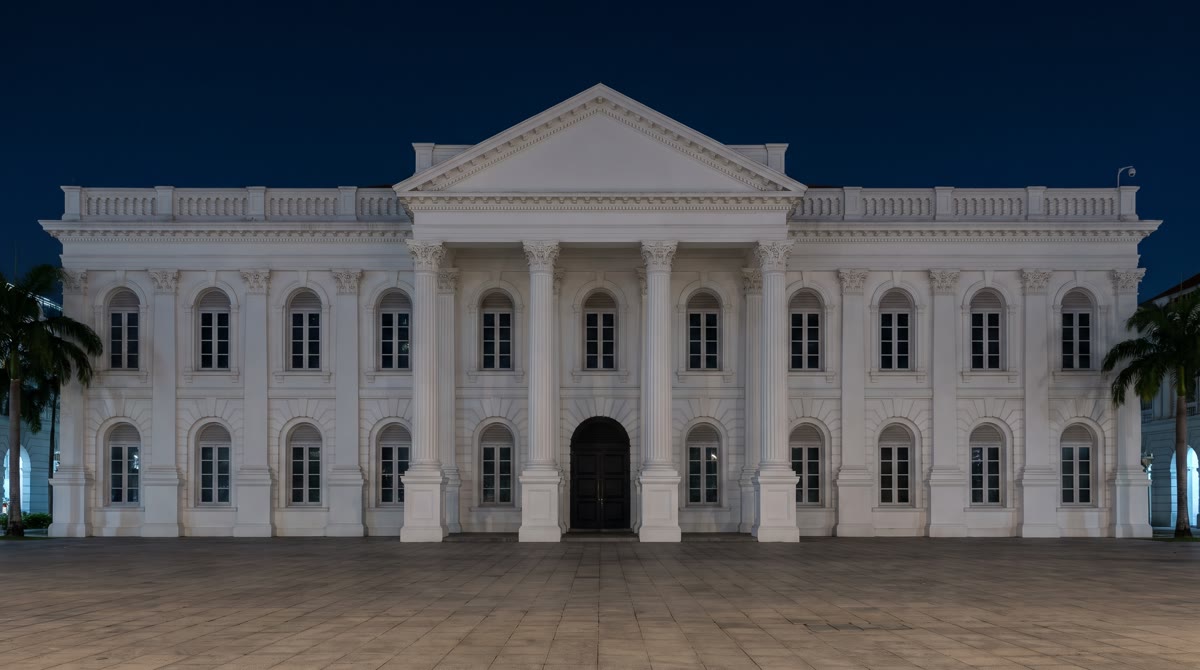
1 · Facade templateStraight-on elevation, the reference for every scene.
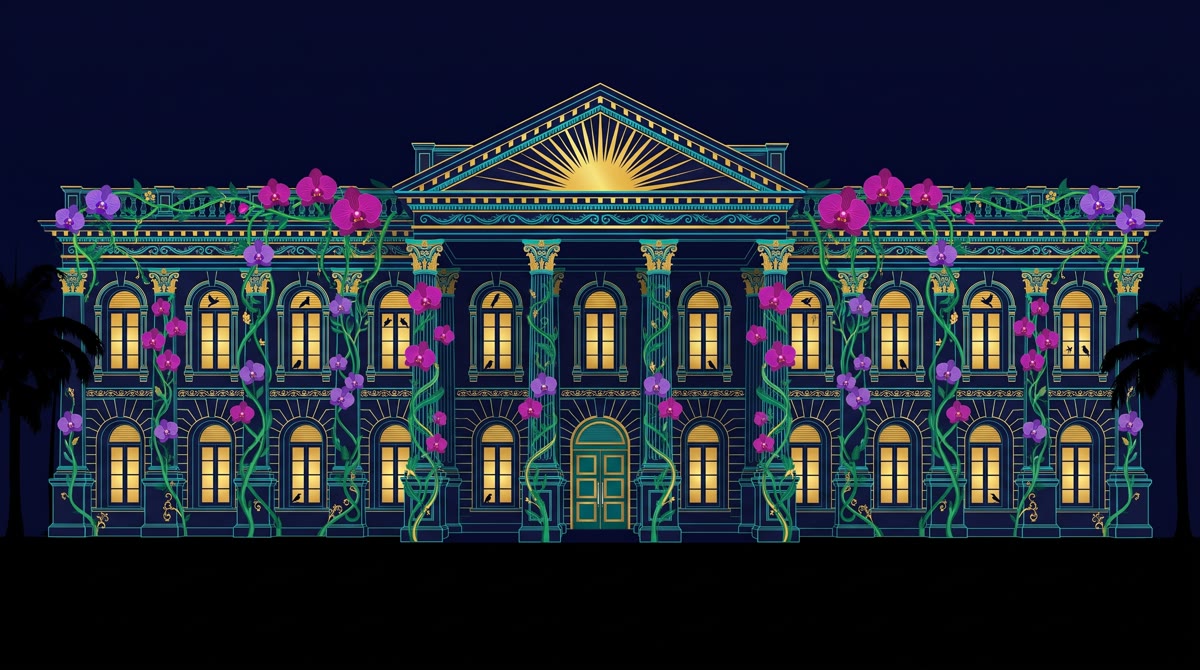
2 · Flat artworkIllustrator-style vector look, split into layers by colour: structure, windows, sunburst, plants.
This is what goes to the media server: pure content on black, sky and plaza stay dark so no light is wasted off the building. Delivered as a 4K master; codec and resolution per facade as your projection team needs them.
I detect the beats in the track first, then key every event to them. Your 16 scenes would be timed to your soundtrack the same way.
The architecture draws itself in light, bottom to top, on the riser.
Hit: the full artwork lands with a flash, exactly on the first kick.
One window pair lights per beat, from the centre outwards.
Vines and orchids climb the columns; the sunburst pulses on every beat.
A light sweep on the bar at 9.97 s, then windows switch off on the beat and the lines fade out.
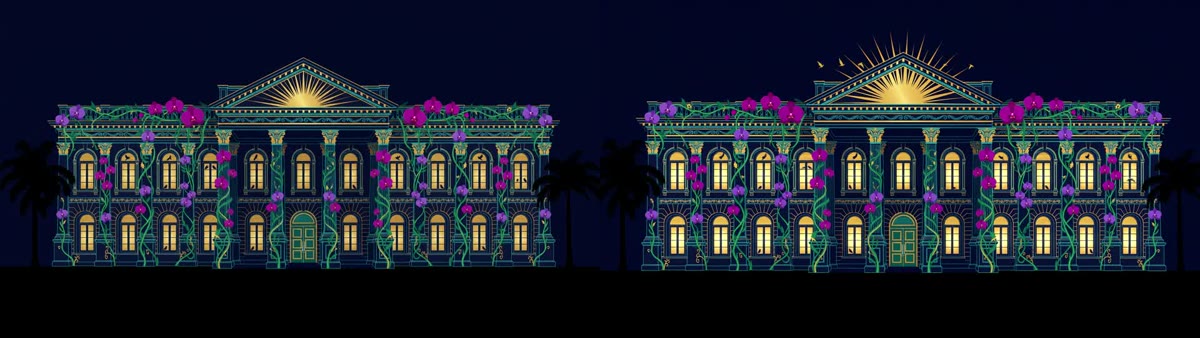
I also ran the same artwork through an AI image-to-video model. It looks lively, but the building scales and drifts from the first to the last frame, so it would no longer line up with the real facade. I use AI for the artwork and for loose elements, and animate everything that touches the architecture myself, with the geometry locked.
AI image-to-video: first frame vs. last frameThe facade shrinks and shifts; on a real building every window would miss.